
FC 27 Career Mode Guide TL;DR
-
The new transfer market uses mechanics like staged negotiations, rival bids, and you can pay in installments.
-
Dynamic OVR changes player ratings according to their form, morale, and fitness.
-
Six Growth Profiles make player development less linear.
-
Scouting reveals attributes immediately but requires further work to assess fit, potential, finances, and player interest.
-
Manager Live Creator Challenges let players build and share custom Career scenarios.
Still haven’t bought your FC 27 copy, or planning to start a new save on another platform? You can get an FC 27 account on Playhub, with quick delivery from verified sellers.
FC 27 Career Mode Changes
FC 27 really went in the direction of creating a more realistic experience for players. The most notable changes that make the game feel more believable are:
-
Transfers now take time
-
Ratings move with performances
-
AI clubs recruit with clearer priorities
-
Players no longer follow one determined development curve.
The biggest improvement is that these systems interact. An otherwise average striker in great form can gain a high Dynamic OVR, which increases his value and attracts richer clubs. In FC 26, you could just plan several seasons around a potential number and assume the player would eventually reach it, but in FC 27 you have to actually play around what you have and get rewarded for it.
Best FC 27 Career Mode Settings
Authentic Gameplay is a great option for a long Manager Career. Competitive settings are responsive, but they make league matches feel like Ultimate Team without the cards. What Authentic Gameplay 2.0 does is give individual players more weight and allows realistic stuff like weather, fatigue, and fouls to actually have an impact on the game. Here are the options I find best for the mode:
|
Gameplay Type |
Authentic |
|
Match Length |
6 to 8 |
|
Difficulty |
World Class or Legendary |
|
Competitor Mode |
Off |
|
Player-Based Difficulty |
On if you want star players to stand out |
|
Injury Frequency |
Default |
|
Negotiation Strictness |
Strict for realism |
A lot of these come down to what you like in your gameplay. Don’t just copy somebody else’s slider set before playing the game yourself and figuring out what you want to see happening in your game.
FC 27 Transfer Market Explained
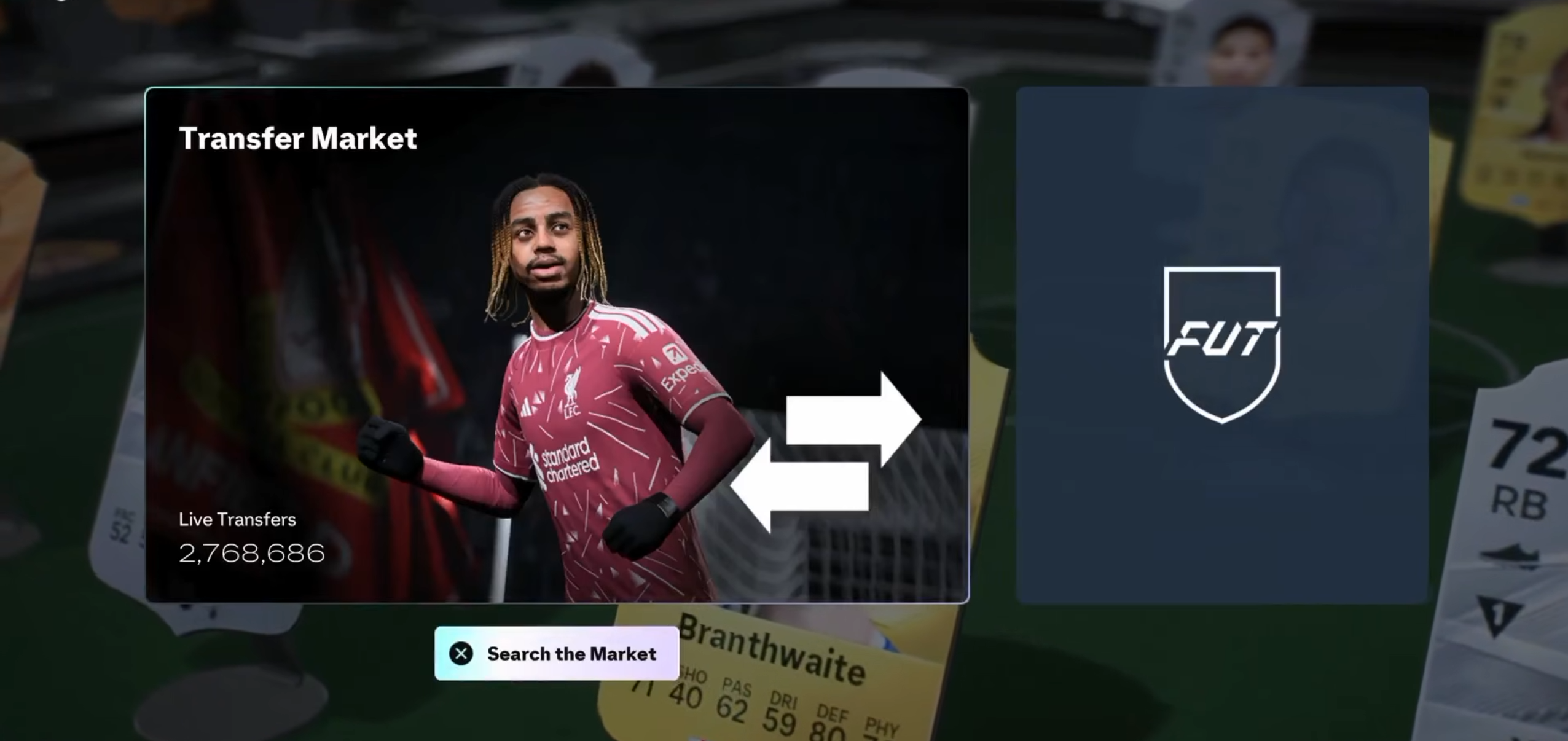
Transfers are the center of Manager Career this year. According to the official FC 27 Career Mode Deep Dive, values are informed by TransferRoom’s Expected Transfer Value model and can change as the market develops.
Probably the biggest change is that a deal no longer begins and ends in one meeting. You first make an inquiry, wait for permission, only then negotiate with the club and player, and then respond if another bidder changes the situation. Rival clubs can therefore hijack a transfer, but it could also work in your favor since selling a club or player may reopen terms after you thought the important work was finished. I like this more than FC 26’s instant shopping-list system since this one is way more immersive and dynamic.
How to Negotiate Better Deals
There are a few tips to keep in mind when doing your shopping. Keep two or three alternatives on the shortlist and start with a moderate inquiry. If the tension meter moves toward a breakdown, the small saving you are chasing is rarely worth losing the deal. FC 27’s systems as a whole give you far more control over the payment structure:
-
Installments let you spread a fee across several seasons.
-
Performance bonuses
-
Loan-back agreements let a new signing remain with the selling club for some time.
-
Buyback clauses give the selling club a route to re-sign the player later.
-
Sell-on clauses trade some future revenue for a lower immediate price.
-
First-refusal clauses allow a club to match a future offer.
-
Future start dates delay the transfer until the next window or season.
How AI Clubs Work in FC 27
AI clubs were improved - they now build parallel shortlists, consider performance statistics, and recruit according to their manager’s preferred style. Youth-focused clubs are more likely to invest in prospects, and established teams pursue players who raise the quality of the squad. Historic and local rivals are also less willing to trade directly now.
This should reduce two long-standing Career Mode problems: recently transferred players moving again shortly after being signed and elite teams replacing stars with clearly weaker footballers. It will not make every deal AI makes perfect, but the market has more logic behind it than FC 26’s rating-first system.
FC 27’s Dynamic OVR, Form and Match Fitness
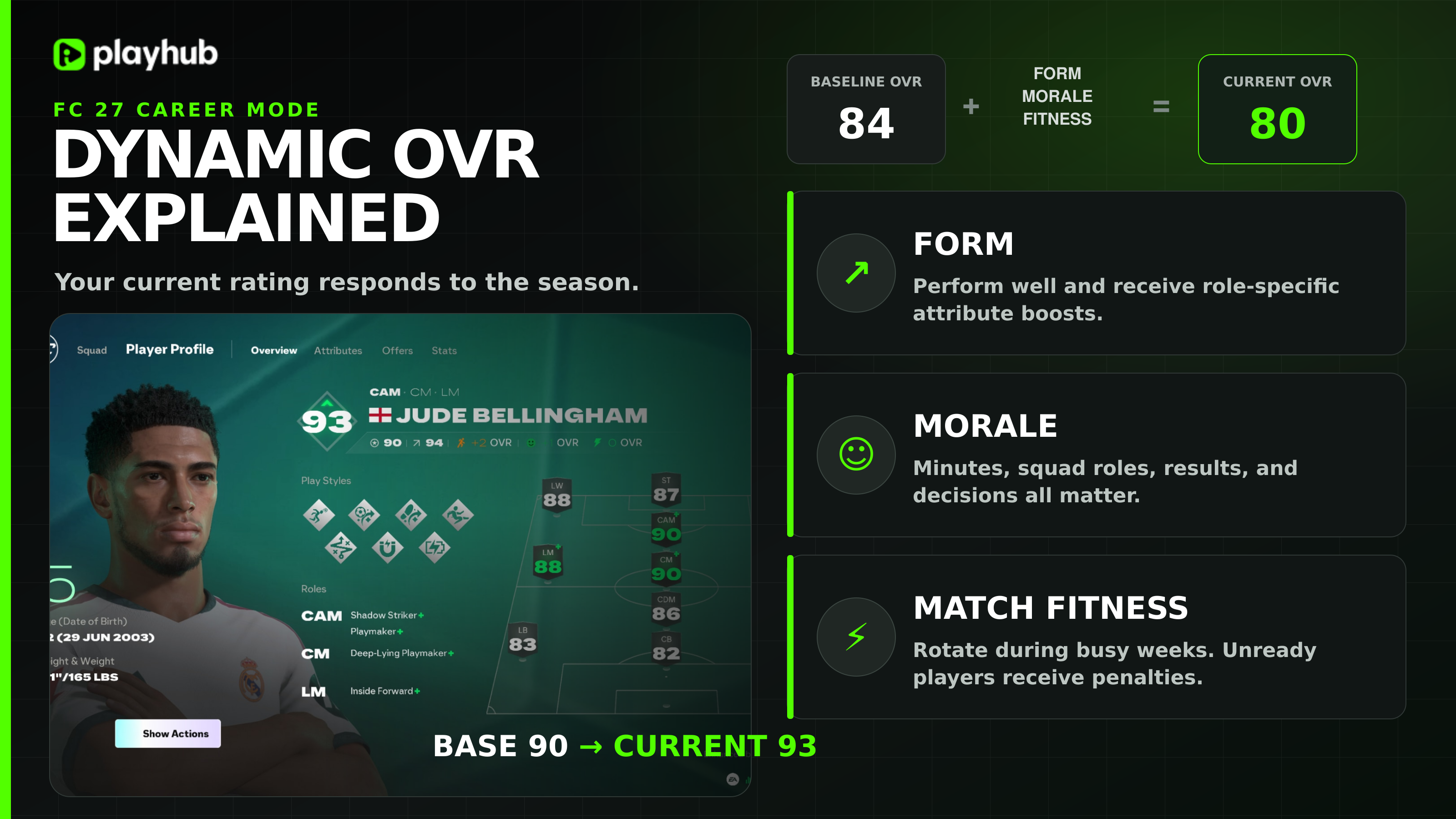
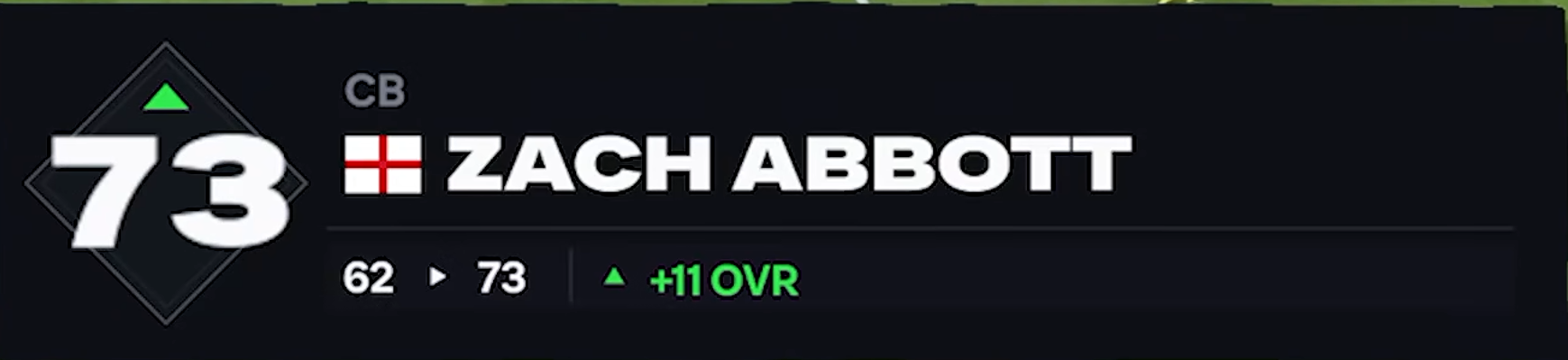
Dynamic OVR is the change you will notice impacting your gameplay a lot. A player still has an underlying OVR skill level, but their displayed stat can rise or fall through three main factors: form, morale, and match fitness. That way, steady good match performances create momentum, but at the same time poor results, management, and injuries can make a potentially good player perform extremely badly. From what I’ve seen, young prospects tend to have much bigger stat swings than the established players - with a youngster, you can go from 65 to 90 ovr in the matter of a couple of months..
That means rotation has a real cost-benefit decision. Starting the same eleven may protect form, but tired or lightly injured players can lose Match Fitness and perform below their rating. FC 27 removes the old Training Plan system apart from Energy Recovery, so you spend less time switching plans and more time deciding who should actually play.
|
Factor |
How to Negate |
|---|---|
|
Form |
Make sure to give prioritized players consistent minutes in roles that suit them |
|
Morale |
Set realistic squad roles, answer press questions carefully, and try to not have lots of unhappy backups. |
|
Match Fitness |
Rotate players during busy weeks and do not rush lightly injured starters back for ordinary matches. |
|
Energy |
Use recovery appropriately and substitute earlier when a result is secure. |
|
Competition |
Keep a credible backup, but avoid having two players expecting Crucial status in the same position. |
I think that the devs made a choice to force players to OVR as the only thing that decides games. You now have so much more freedom in your choice - a 79-rated player in excellent form may help your team more than an 82-rated signing who is unhappy and unfit. This also creates exciting transfer-market opportunities: buy talented players during a poor spell instead of paying a premium for somebody at the top of their game.
Player Growth, Potential and Scouting
FC 27 introduces six Growth Profiles that control when players improve, reach their peak, and begin to decline. EA has not designed every career to follow the same curve: one prospect may develop early, another may keep improving a lot into his late twenties, and an established star may either maintain his level or start to decline sooner than expected.
Potential is also less deterministic to the player’s success. Coaches estimate the ceiling of your own players, and you set up scouts to assess outside targets. Better staff provide more reliable prospects, but even a strong report is an estimate rather than a promise. Coaches no longer hand out direct attribute improvements; their value comes from evaluating potential and helping you make better development decisions.
Scouting progresses faster at the start because player attributes are reported immediately. A complete report needs time to progress through four useful areas:
-
Tactical Fit assesses present performance and suitability for your system.
-
Future estimates potential and expected development.
-
Financial Assessment covers likely costs and interest in a transfer.
-
Status examines happiness and willingness to move.
This stats is a much better reason to maintain a good scouting network. In FC 26, I mostly waited for numbers to appear, but in FC 27, the basic numbers are already there; scouts' function now shifts to helping you answer whether the transfer makes sense.
How to Develop Young Players
Minutes played is still the most reliable development tool in the game. Strong performances can improve Dynamic Potential, and FC 27 applies that system to AI clubs inside your selected Deeper Simulation leagues. This affects the game a lot because prospects outside your squad can now grow through their own actual performances in the simulated matches, which makes the whole market way more immersive to follow and try and get the most of.
Players can also perform in as many as seven positions. Secondary preferred positions use their own baseline OVR and do not carry the usual out-of-position penalty, so versatile players are extremely valuable when your player’s injuries pile up. I would still develop a youngster around one clear role instead of changing his position every few weeks; that remains a better tactic this year.
Best FC 27 Career Mode Teams to Use
The best club depends on how challenging you want your progress to be:
-
Playing a superclub lets you learn transfers and Dynamic OVR without worrying about budgets and scouting too much.
-
A fallen giant gives you pressure to restore its former glory and a flavourful history.
-
A low-league club makes youth development and finances much more important and lets you create your own rags-to-riches story.
Career Mode stays interesting longer when recruitment reflects the club. I like to set my own rules and restrictions - such as signing only scouted players, maintaining a domestic core, or selling when a Champions League club makes a good offer.
FC 27 Career Mode Tips
If you’re new to the Career, there are several things you certainly won’t regret doing:
-
Keep a shortlist of players you want to get since staged negotiations and rival bids make backup targets necessary.
-
Protect future budgets. Record installment obligations before committing to another expensive deal.
-
Rotate players before their fitness gets too low.
-
Use the Practice Arena. Test your starting eleven against reserves before changing tactics in a league match.
-
Scout the actual situation - form and willingness to join are now huge factors.
-
Choose Deeper Simulation leagues deliberately to get better players that suit your club.
-
Sell at the right moment since the dynamic OVR can inflate a player’s value during a strong run.
Check out other helpful FC 27 articles here: