
WoW Forever Gold Farming TL;DR
-
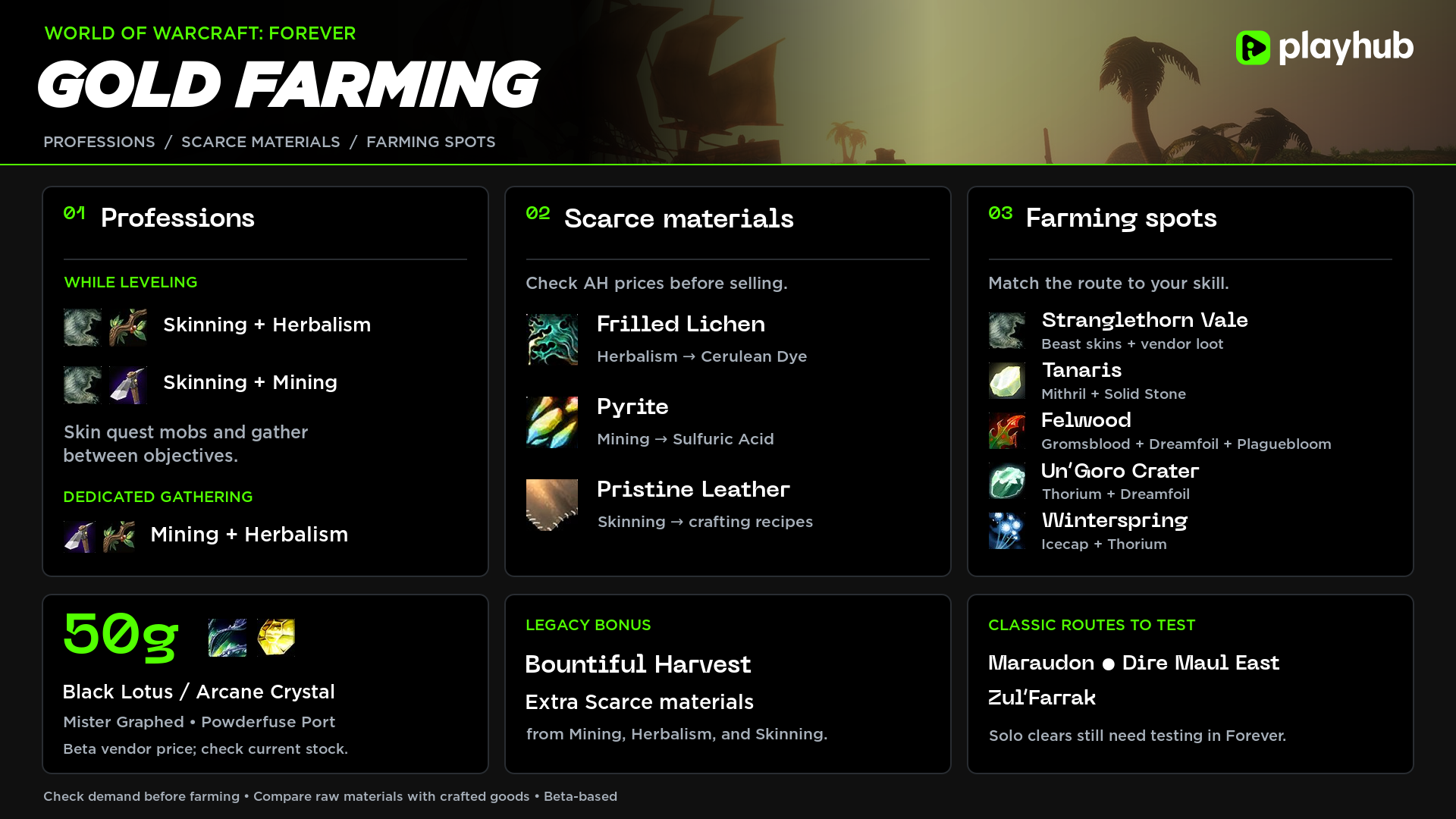
Skinning plus Herbalism or Mining works well while leveling. You’ll get enough gold for early expenses such as consumables and crafting materials for your professions.
-
Keep an eye on Scarce materials. Frilled Lichen, Pyrite, and Pristine Leather are used in new recipes and will definitely be decently priced while everyone’s leveling and even after that.
-
Farm what sells. Check the AH prices and develop new farming strategies based on the market’s demand - a Mithril route can pay better than competing with everyone for Thorium.
-
Check rare reagent prices against Mister Graphed’s stock. Black Lotus and Arcane Crystals were available for 50 gold each during beta.
-
Don’t ignore Legacy points and camping. Their gathering bonuses and extra resources can add up over time.
Starting fresh in WoW Forever? You can get WoW Forever Gold on Playhub, with competitive prices and quick delivery from verified sellers.
Best Ways to Make Gold in WoW Forever
If that’s your first character, you don’t have to stop leveling to earn gold. Skin the beasts from your quests, collect nearby herbs or ore, and sell the materials when you return to town. Dedicated farming becomes way more worthwhile when you can reach better materials that are later in the game or kill lots of mobs quickly:
|
Method |
What you sell |
|---|---|
|
Questing with gathering |
Herbs, ore, leather, and vendor junk drops |
|
Beast grinding |
Leather, hides, Scarce materials, and vendor loot |
|
Gathering routes |
Materials from several nodes on one route |
|
Humanoid grinding |
Cloth, coin, and equipment drops |
|
Dungeon runs |
Vendor loot and tradable drops |
|
Crafting |
Bags, consumables, pre-raid and leveling equipment, and crafted reagents |
At least some amount of Raw gold comes straight from quests, you looting mobs and vendoring junk. Auction House income usually takes some time to actually get to your account because someone has to buy the item first. Sometimes grinding a few quests is the fastest way to get the gold you’re missing for some of your goals.
Best Professions for Gold Farming
Skinning is easy to fit into a leveling run, and it’s going to be profitable since Forever puts more emphasis on crafting your gear during leveling. You’re already killing wolves, raptors, and other beasts, so looting and skinning them adds very little downtime in return for decent money. Herbalism or Mining gives you another source of materials on the way to the next quest. With Mining and Herbalism together, more of your time goes into finding nodes, which is a solid choice if you enjoy wandering around looking for resources. As per usual, you can have two primary professions alongside Cooking, Fishing, and First Aid, as explained in Blizzard’s Forever starter guide.
|
Professions |
Good for |
What to watch |
|---|---|---|
|
Skinning + Herbalism |
Questing through beast-heavy areas |
Don’t keep chasing herbs far outside your objectives |
|
Skinning + Mining |
Skinning mobs while collecting nearby ore |
Caves and cliffs can turn a short detour into a long one |
|
Mining + Herbalism |
Dedicated gathering laps |
Both skills need to keep up with the zones you visit |
|
Herbalism + Alchemy |
Selling herbs, dyes, and consumables |
Training and buying recipes can eat the early profit |
|
Skinning + Leatherworking |
Making selected gear from gathered leather |
Check whether the leather would sell for more |
Two gathering professions let you sell materials without paying anything to level a craft first. Stuff like fishing and cooking could prove profitable, too, but I don’t think they’ll be anywhere good enough to replace the traditional gathering and crafting picks.
Scarce Materials You Should Keep
Forever’s Scarce reagents can appear alongside ordinary gathering loot. Some of them feed professions you wouldn’t even consider to be connected with the gathering source: Herbalists collect materials that Alchemists turn into dyes, and those dyes go into other crafts. These are examples to look up when they appear in your bags:
|
Material |
Source |
Used for |
|---|---|---|
|
Frilled Lichen |
Herbalism |
Cerulean Dye |
|
Rosecap |
Herbalism |
Magenta Dye |
|
Stranglevine |
Herbalism |
Viridian Dye |
|
Pyrite |
Mining |
Sulfuric Acid |
|
Pitchblende |
Mining |
Azerothium Bars |
|
Pristine Leather |
Skinning |
New equipment recipes across several professions |
If you have Alchemy, check the dye price before selling your Lichen. Then check how much Lichen the recipe consumes. Crafting is only worth doing when it adds enough profit to cover the ingredients cost or level your skill.
Best WoW Forever Gold Farming Locations
These circuits cover familiar zones with documented gathering materials. Their order is a suggested way to travel through the area, but you can mix it up to get the node spawn times right:
|
Location |
Farm |
Route |
|---|---|---|
|
Northern Stranglethorn Vale |
Beast skins and vendor drops |
Nesingwary camp → tiger and panther quest areas → raptor grounds → back to camp |
|
Tanaris |
Mithril and Solid Stone |
Gadgetzan → outer rocky edges → southern ridges → back north |
|
Felwood |
Gromsblood, Dreamfoil, Plaguebloom |
Southern entrance → north through the zone → return along the other side |
|
Un’Goro Crater |
Thorium and Dreamfoil |
Marshal’s Refuge → outer crater wall → lap around the zone → back to the refuge |
|
Winterspring |
Icecap and Thorium |
Everlook → northern hills → western ridges → back to Everlook |
With all of these, whether the farm is worth your time or not depends on the current market situation and how contested the zones are. Sometimes you can make more money doing low-level zone farming; sometimes the prices are getting devalued by too many players selling their stocks at the same time. You have to make dynamic decisions and sometimes be really patient with your resources to get as much gold as possible.
Farming Dungeons and Humanoid Mobs
Even though it’s early, there are specific drops to target in Forever already, including new camping Blueprints from dungeon bosses. The level-60 solo farms are a different story: the beta level cap was 30, so OG Maraudon and Dire Maul routes still need testing with Forever’s changes and even possible nerfs.
Dungeon Farms to Check
Two concrete Forever targets are Relic Guardian in Excavation Site: Wetlands, which is listed as dropping Blueprint: Rock Garden, and Gelihast in Blackfathom Deeps, which drops Blueprint: Fishing Rack. Both teach camping features used at 140 profession skill.
For higher-level characters, these Classic routes are worth testing:
|
Dungeon farm |
Where the money came from in Classic |
|---|---|
|
Maraudon boss runs |
Killing Princess Theradras and Tinkerer Gizlock, then vendoring unwanted boss drops |
|
Maraudon gathering runs |
Ghost Mushroom, Blindweed, and Mithril along the caverns |
|
Dire Maul East jump runs |
Boss loot, herbs, and Rich Thorium in the cave beyond the final boss |
|
Zul’Farrak graveyard pulls |
Large AoE pulls for coin, Mageweave, and vendor items |
Maraudon boss runs were centered around vendoring soulbound gear; that’s where the bulk of gold came from, so any changes to that will destroy this method. Dire Maul East gets more interesting when someone can gather the herbs and mine the final cave. Without those professions, you’re leaving lots of income behind.
Open-World Cloth Farms
Cloth farming doesn’t require a profession, and you can leave whenever you’ve had enough. The following are established Classic spots still worth the hassle in Forever:
|
Location |
Classic targets and drops |
|---|---|
|
Dunemaul camps, Tanaris |
Ogres dropping Mageweave |
|
Western Plaguelands farms |
Undead dropping Runecloth |
|
Jadefire camps, Felwood |
Satyrs dropping Felcloth alongside ordinary cloth |
For solo farming, your farming speed matters more than anything. A hard caster-heavy pack that makes you interrupt, chase, and drink after every pull can earn way less than an easier camp you can clear with minimal trouble.
How to Tell Whether a Farm Is Worth Doing
A 30-minute test is usually enough to spot problems: too many players contesting you, too much travel time, mobs that take ages to kill, or materials nobody is buying. It won’t establish an exact hourly average - that takes a lot more time, especially if you’re farming for something rare. But it will tell you whether spending the rest of the evening there sounds worthwhile.
Before heading out, check the prices of the farm’s main materials and clear your bags. Afterward, separate vendor loot from items going to the Auction House, then see what actually sells. Include the travel time to the zone and back when judging the result. I definitely wouldn’t count a lucky rare drop as the farm’s normal income - the more you do it, the more the income evens out, and that’s where the true numbers you can make come out.
Making Gold With Crafting and the Auction House
Forever adds over 600 profession recipes, including new crafts throughout leveling. There are also advanced camping Blueprints dropping from dungeon bosses, covered in Blizzard’s profession and camping overview. That leaves more options for you to make money on AH than the usual Classic bags-and-potions list, but that wouldn’t make every recipe worth crafting. A few sales made quickly will tell you if the item has any unfulfilled demand. Craft a small batch and see whether it moves; wasting all your materials on the same item could be a big mistake.
|
What you’re selling |
Check before making more |
|---|---|
|
Bags |
Whether the finished bag cost covers the cloth, other reagents, and selling costs |
|
Consumables |
Whether buyers are taking your stock, rather than leaving it to expire |
|
Bars |
Whether smelting pays more than selling the ore |
|
Crafted gear |
Whether there are buyers at that level and price |
|
Enchanting materials |
Whether breaking down a green is worth more than vendoring or selling it |
Gathered materials still cost you something: the gold you could have earned by selling them. If a crafted item sells for less than its ingredients, it’s just not worth the hassle. Flipping items can work, but stick to items you understand. There’s also an AH fee to keep in mind; that thing often turns what looks to be a profitable deal into a complete ruin.
Mister Graphed and Rare Reagent Prices
Mister Graphed sells crafting materials in Powderfuse Port, Riverglades. During beta, his stock included Black Lotus and Arcane Crystals at 50 gold each, according to Wowhead’s vendor coverage. That changes the old plan of buying out rare reagents and reposting them much higher later. Buyers have somewhere else to go if the price goes too high; Blizzard effectively capped these items' prices in Forever.
Legacy Perks and Camping Bonuses
The Legacy System has several perks for gathering and crafting. You earn points across the account by doing specific achievements, then spend them separately on each character. With a launch cap of 16 spent points per character, you’ll have to do different allocations for gathering characters; here are the ones worth the investment:
|
Perk |
Effect |
|---|---|
|
Bountiful Harvest |
Gives additional Scarce materials from gathering professions |
|
Working Overtime |
Improves your chance of gaining profession skill |
|
Bartering |
Reduces vendor purchase prices |
|
Master Chef |
Can produce extra results from Cooking |
|
Luremaster |
Can give you additional fish |
As you can see, a lot of them are very impactful in different ways. Bountiful Harvest could turn your average gathering sessions into a huge haul with its up to 100% increase at rank 5, and working overtime can cut your profession leveling expenses significantly.
Check out other helpful WoW Forever articles:
